The case for a throwback summer

What is your favorite childhood summer throwback?

I, for one, remember a lot of morning sitcom reruns, sandlot baseball, the icy-chill of a well-conditioned library and an annual block party. What’s yours?

I enjoyed joining the impressive Cherri Gregg and Avi Wolfman-Arent on WHYY’s Studio 2 this week, alongside Stephanie Humphrey and Marc Faletti.

This is especially timely as the parent of young kids, as I embark on a summer of activities and camps — balancing developing and fun, boredom and screens and all the rest. Give this a watch and let me know what you remember from your own summer childhood! https://lnkd.in/gZ-VqfVr

Continue reading The case for a throwback summer

A vision for Philadelphia 250 years from today

This might be the project, and the writing, I’m proudest of in my career thus far.

Find here the backstory, and an Inquirer op-ed here I wrote. Below find the words of a vision statement for Philadelphia 250 years from now, which has now inspired a mural by my friend Sean Martorana and Mural Arts Philadelphia.

Continue reading A vision for Philadelphia 250 years from today

Who are entrepreneurs enemies? My 2026 Technical.ly Builders Conference keynote

Below is my Friday speech, inspired by this bet, and following this live podcast recording.

I want to tell you about a bet I have with Brian Brackeen.

I’ve known for Brian for more than 10 years, back when he founded a facial recognition startup in Miami. He’s built in machine learning longer still. He and his wife and partner, Candice, cofounded Ohio-based VC firm Lightship Capital, investments around AI. He organizes Black Tech Week. He’s got opinions.

Last year we debated whether AI would imminently replace software developers. Brian said yes—developer jobs would fall. I disagreed. We bet a cheesesteak, or more properly having to wait in line for one, deadline May 2026.

It’s May 2026. This morning we’re going to learn the answer together, and what it means either way.

Continue reading Who are entrepreneurs enemies? My 2026 Technical.ly Builders Conference keynote

Moravec’s Paradox

This was original a social video post

I want AI to do my dishes and laundry so that I can do art and writing, not for AI to do my art and writing so I can do more dishes and laundry.

That 2024 tweet went viral. And there’s a name for this: Moravec’s Paradox, and it dates back to 1988, from a machine learning researcher.

Continue reading Moravec’s Paradox

Statistics aren’t reversible

This was originally a social video.

You might have seen Robert F. Kennedy Jr. make a statistics mistake today.

Rather than clown on it, I wanted to explain the simple and interesting concept behind the gaff.

RFK: “And I said, well, if the drug was $100 and it raised the price to $600, that would be a 600% rise. If it drops from 600 to 100, that’s a 600% savings.”

I’m not one to judge because I’ve made lots of numeracy mistakes in my day, including in my journalism. And statistics actually are complicated, but they’re
cool. So, it’s worth looking at what’s happening here.

Continue reading Statistics aren’t reversible

Technical.ly journalists leading an AI discussion

I was proud to see three journalists and current and former Technical.ly newsroom staffers are leading an upcoming AI conversation a conference hosted at Philadelphia’s NPR affiliate.

My current colleague Danya Henninger, who oversees our newsroom, will be alongside two treasured former teammates: Julie Zeglen, who is now at the Philadelphia Inquirer, and Paige Gross, who has joined the B2B publisher Industry Dive. It felt reaffirming that when organizers curated a list of thinkers on the topic of artificial intelligence and media, all three have Technical.ly ties.

They’re smart and delightful. Check out the Philadelphia Student Press Association‘s inaugural summit April 24.

Two years after Hind Rajab’s killing in Gaza

This is adapted from a social video I published.

Last year, when I published a video I made about Palestine, I stayed close to my own lane: the documented killings of Palestinian journalists. That’s my trade, my expertise. It’s also considered a war crime.

Over my years of local reporting on economic issues, I’ve received criticism about speaking about geopolitics, and about *not* speaking about geopolitics. So I don’t know what to do other than be honest.

And, to be honest, I keep thinking about Hind Rajab, the little girl in Gaza who was the same age two years that my daughter is today. As Omar El Akkad has written: “There’s no such thing as someone else’s children.”

Continue reading Two years after Hind Rajab’s killing in Gaza

What’s my personal “artificial intelligence” philosophy

It was summer 2009 that I was first introduced to the idea that robotics and artificial intelligence are two halves of how a machine would move through our world. One is physical motion, and the other is a big term for computer systems that mimic human cognition — from computer vision and probabilistic language to sound mimicry and risk management.

Over the next near two-decades, my reporting and entrepreneurship have evolved alongside a new fast-moving chapter of these technologies we call “artificial intelligence.” I’ve spent at least a decade developing my own relationship to what some have called “the singularity.” Now the last few years have brought this into the mainstream. That’s forced me to develop a more precise view.

Continue reading What’s my personal “artificial intelligence” philosophy

Gubernatorial conversations

I’ve recently interviewed a pair of influential elected officials: Delaware Gov. Matt Meyer and Maryland Lt. Governor Aruna Miller. I filed Technical.ly stories. Find the live recordings of my interviews and links to my reporting below.

The Technical.ly beat once felt less directly state relevant, but that’s shifted in recent years, with the rise of industrial policy and the importance of entrepreneurship. As publisher, I’ve seemed like a good starting point for direct interviewing, though our newsroom has long interacted with these and other elected officials at the state level around policy and one-off engagements. This marks something that will likely be more direct and more frequent now, reflecting our beat’s growing profile.

Continue reading Gubernatorial conversations

Science communication at a crossroads

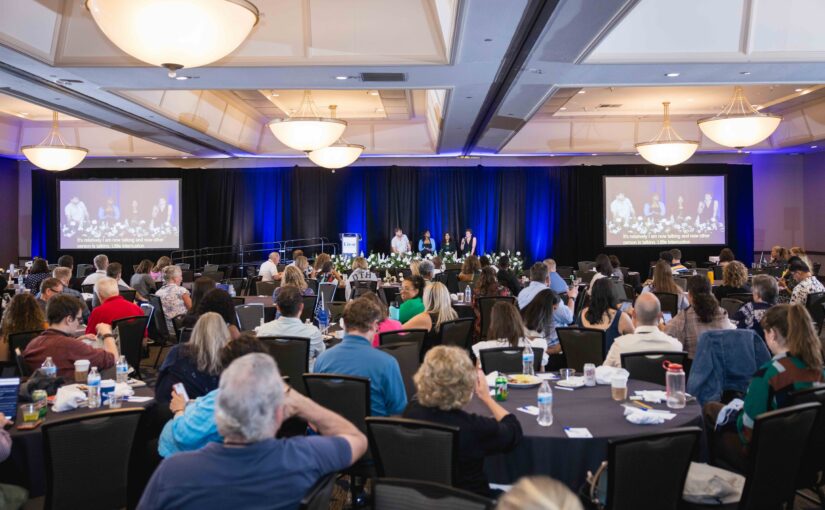
I joined a spirited conversation at the University of Maryland BioPark for a system-wide symposium on science communication.

I filed a story for Technical.ly here. Our panel looked like this:

  • Megan Nicholson, a senior editor at Issues in Science and Technology
  • Heath Kelsey, director of the Integration and Application Network at the University of Maryland Center for Environmental Science.
  • Christopher Wink, cofounder and publisher, Technical.ly
  • Moderator, Michael Sandler, the UM system’s vice chancellor for communications and marketing